NATO’s Military Operations: From Kosovo to Afghanistan

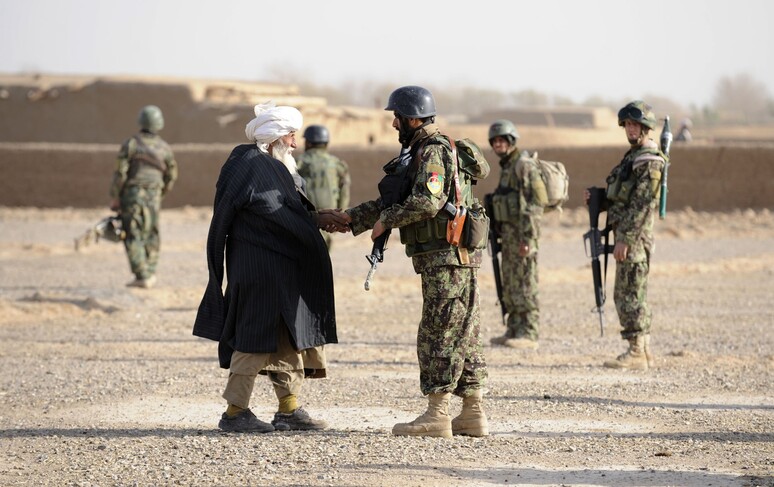
radicalthought.org – The North Atlantic Treaty Organization (NATO) has been a cornerstone of collective defense and security in Europe since its inception in 1949. Over the years, NATO has evolved from a defensive alliance to a proactive force, engaging in various military operations around the world. This article explores two significant military operations conducted by NATO: the intervention in Kosovo and the mission in Afghanistan.

NATO’s Role in Kosovo

Background and Operation Allied Force

The Kosovo conflict in the late 1990s was a humanitarian crisis that drew international attention. The Serbian government, under Slobodan Milošević, was engaged in a brutal campaign against the ethnic Albanian population in Kosovo, leading to widespread displacement and violence. In response, NATO launched Operation Allied Force, its first offensive military operation, on March 24, 1999.

Operation Allied Force involved a 78-day air campaign aimed at halting the humanitarian catastrophe and compelling the Serbian regime to capitulate. The operation was a success, leading to the withdrawal of Serbian forces from Kosovo by June 1999.

Kosovo Force (KFOR)

Following the air campaign, NATO established the Kosovo Force (KFOR) on June 12, 1999, under the mandate of United Nations Security Council Resolution 1244. KFOR’s mission was to maintain a safe and secure environment, facilitate the return of displaced persons, and support the development of multi-ethnic institutions in Kosovo.

KFOR has been a significant presence in Kosovo, adapting its mission over the years to address evolving security challenges. The force has been instrumental in stabilizing the region and supporting the development of Kosovo’s institutions.

NATO’s Mission in Afghanistan

The Beginning of the ISAF

The September 11, 2001, terrorist attacks on the United States marked a turning point in global security. In response, NATO invoked Article 5 of its founding treaty for the first time, declaring that an attack on one member was an attack on all. This led to NATO’s involvement in the International Security Assistance Force (ISAF) in Afghanistan.

NATO took the lead of ISAF on August 11, 2003, with the primary mission of stabilizing Afghanistan and helping to rebuild the country. The mission involved training the Afghan National Security Forces, providing security, and supporting the development of democratic institutions.

Challenges and Adaptations

The mission in Afghanistan was not without its challenges. The Taliban insurgency, coupled with the complex political landscape, made the task of stabilizing the country difficult. NATO’s strategy evolved over the years, focusing on counter-insurgency operations and nation-building efforts.

Despite the challenges, NATO’s presence in Afghanistan was crucial in providing a stable environment for the Afghan government to take root and for international aid to flow into the country. The mission officially ended in 2014, marking a significant chapter in NATO’s history of international peacekeeping and security operations.

Conclusion

NATO’s military operations in Kosovo and Afghanistan highlight the organization’s adaptability and commitment to global security. From the decisive air campaign in Kosovo to the long-term stabilization efforts in Afghanistan, NATO has demonstrated its ability to respond to complex security challenges. These operations have not only shaped NATO’s strategic direction but also had significant impacts on international relations, particularly with Russia211.

The FBI’s International Reach: Global Operations & Partnerships

radicalthought.org – The Federal Bureau of Investigation (FBI) is renowned for its domestic law enforcement and intelligence operations within the United States. However, the scope of its activities extends far beyond national borders, engaging in a myriad of international operations and forging critical partnerships worldwide. This global reach is essential in an era where crime and security threats are increasingly transnational.

The Evolution of the FBI’s International Role

The FBI’s international engagement began in earnest during the mid-20th century, primarily focused on counterintelligence and the pursuit of fugitives who had fled the United States. Over time, the nature of global threats evolved, leading to a significant expansion of the FBI’s international footprint. Today, the agency plays a pivotal role in combating terrorism, cybercrime, and other transnational threats.

Legal Attachés: The FBI’s Eyes and Ears Abroad

The FBI’s international presence is primarily facilitated through its network of Legal Attachés (Legats), stationed in U.S. embassies and consulates around the world. These Legats serve as the FBI’s official representatives, liaising with foreign law enforcement agencies, intelligence services, and international organizations. They play a crucial role in information sharing, joint investigations, and operational coordination.

As of 2024, the FBI has over 60 Legats across the globe, reflecting its commitment to a broad international engagement strategy. These offices are strategically located in regions with significant security challenges, including the Middle East, Europe, and Asia.

Joint Operations and Task Forces

The FBI frequently participates in joint operations and task forces with international partners. These collaborative efforts are essential in addressing complex and transnational threats that no single agency can tackle alone. Examples include the Joint Terrorism Task Forces (JTTFs), which bring together FBI agents, local law enforcement, and international partners to combat terrorism.

Cybercrime is another area where international collaboration is critical. The FBI works closely with Interpol, Europol, and other international bodies to investigate and disrupt cybercriminal networks. Operation Endgame, mentioned earlier, is a prime example of such collaboration, involving multiple countries and agencies.

Challenges and Controversies

Despite the successes of international collaboration, the FBI faces several challenges in its global operations. Legal and jurisdictional issues can complicate cross-border investigations, requiring careful navigation of international laws and treaties. Additionally, political sensitivities and differences in law enforcement practices can strain partnerships.

Privacy and civil liberties concerns also arise in the context of international surveillance and intelligence sharing. The FBI must balance its operational needs with respect for individual rights, both at home and abroad.

The Future of the FBI’s International Engagement

Looking ahead, the FBI’s international role is likely to expand further, driven by the evolving nature of global threats. Emerging technologies, such as artificial intelligence and encryption, present new challenges for law enforcement. The FBI will need to adapt its strategies and enhance its international partnerships to stay ahead of these threats.

Conclusion

The FBI’s international reach is a testament to the agency’s commitment to protecting national security in an interconnected world. Through its network of Legal Attachés, joint operations, and strategic partnerships, the FBI plays a vital role in combating transnational crime and terrorism. As global threats continue to evolve, the FBI’s global operations and partnerships will remain a critical component of its mission.