
Stasiun Radio Khusus Perempuan di Afghanistan Ditutup oleh Taliban

radicalthought – Otoritas Taliban di Afghanistan telah melakukan penyerbuan ke stasiun radio khusus perempuan yang terkenal, Radio Begum, pada hari Selasa. Dalam operasi tersebut, dua karyawan ditangkap, dan stasiun tersebut ditutup dengan alasan “pelanggaran berulang”.

Menurut pernyataan dari Radio Begum, petugas dari Direktorat Jenderal Intelijen (GDI) yang dibantu oleh perwakilan Kementerian Informasi dan Kebudayaan melakukan penyerbuan ke kompleks Radio Begum di Kabul. Selama penyerbuan, otoritas Taliban menggeledah kantor, menyita komputer, hard drive, dan telepon, serta menahan dua karyawan laki-laki yang tidak menjabat dalam posisi manajemen senior.

Kementerian Informasi dan Kebudayaan Taliban menyatakan bahwa Radio Begum ditutup karena “pelanggaran berulang” dan karena menyediakan materi dan program ke stasiun televisi yang berbasis di luar negeri. Mereka menambahkan bahwa penangguhan ini dilakukan untuk mengevaluasi dokumen terkait dan mengambil keputusan akhir.

Reporters Without Borders (RSF) menuntut agar larangan tersebut segera dicabut. Organisasi pengawas kebebasan server kamboja informasi ini menyatakan bahwa otoritas Taliban telah menutup setidaknya 12 media lokal pada tahun 2024.

Radio Begum, yang didirikan pada Hari Perempuan Internasional, 8 Maret 2021, telah menjadi platform penting bagi perempuan Afghanistan. Stasiun ini menyiarkan program pendidikan, pembacaan buku, dan konseling telepon yang dirancang khusus untuk perempuan123. Pada tahun 2024, pendiri Swiss-Afghan dari Radio Begum, Hamida Aman, juga meluncurkan stasiun televisi satelit, Begum TV, yang menyiarkan program pendidikan dari Paris untuk membantu gadis dan perempuan Afghanistan melanjutkan pendidikan mereka.

Sejak kembali berkuasa pada tahun 2021, Taliban telah memberlakukan pembatasan ketat terhadap perempuan, termasuk melarang mereka dari sekolah menengah dan universitas serta membatasi partisipasi mereka dalam kehidupan publik. Perserikatan Bangsa-Bangsa telah menggambarkan aturan ini sebagai “apartheid gender”.

Penutupan Radio Begum adalah tindakan terbaru dalam serangkaian tindakan terhadap media lokal di Afghanistan. Pada Desember tahun lalu, otoritas Taliban menutup stasiun televisi Arezo TV dan menahan tujuh karyawan, dengan alasan bahwa stasiun tersebut telah mengkhianati nilai-nilai Islam dan didukung oleh media luar neger.

Penutupan Radio Begum menandai langkah lain dalam upaya Taliban untuk membatasi kebebasan berbicara dan pers di Afghanistan, terutama terkait hak-hak perempuan. Advokat kebebasan pers dan hak-hak perempuan terus menuntut pembebasan staf Radio Begum dan pemulihan operasinya, mengingat pentingnya stasiun ini sebagai suara bagi perempuan Afghanistan di tengah pembatasan yang semakin ketat.
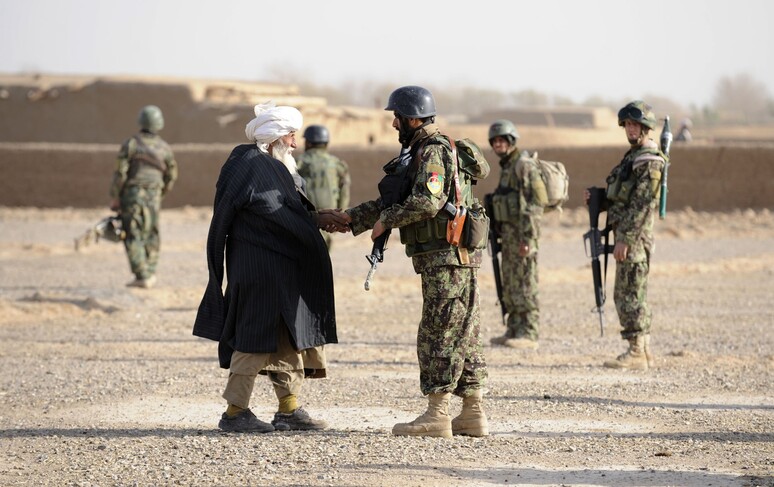
NATO’s Military Operations: From Kosovo to Afghanistan

radicalthought.org – The North Atlantic Treaty Organization (NATO) has been a cornerstone of collective defense and security in Europe since its inception in 1949. Over the years, NATO has evolved from a defensive alliance to a proactive force, engaging in various military operations around the world. This article explores two significant military operations conducted by NATO: the intervention in Kosovo and the mission in Afghanistan.

NATO’s Role in Kosovo

Background and Operation Allied Force

The Kosovo conflict in the late 1990s was a humanitarian crisis that drew international attention. The Serbian government, under Slobodan Milošević, was engaged in a brutal campaign against the ethnic Albanian population in Kosovo, leading to widespread displacement and violence. In response, NATO launched Operation Allied Force, its first offensive military operation, on March 24, 1999.

Operation Allied Force involved a 78-day air campaign aimed at halting the humanitarian catastrophe and compelling the Serbian regime to capitulate. The operation was a success, leading to the withdrawal of Serbian forces from Kosovo by June 1999.

Kosovo Force (KFOR)

Following the air campaign, NATO established the Kosovo Force (KFOR) on June 12, 1999, under the mandate of United Nations Security Council Resolution 1244. KFOR’s mission was to maintain a safe and secure environment, facilitate the return of displaced persons, and support the development of multi-ethnic institutions in Kosovo.

KFOR has been a significant presence in Kosovo, adapting its mission over the years to address evolving security challenges. The force has been instrumental in stabilizing the region and supporting the development of Kosovo’s institutions.

NATO’s Mission in Afghanistan

The Beginning of the ISAF

The September 11, 2001, terrorist attacks on the United States marked a turning point in global security. In response, NATO invoked Article 5 of its founding treaty for the first time, declaring that an attack on one member was an attack on all. This led to NATO’s involvement in the International Security Assistance Force (ISAF) in Afghanistan.

NATO took the lead of ISAF on August 11, 2003, with the primary mission of stabilizing Afghanistan and helping to rebuild the country. The mission involved training the Afghan National Security Forces, providing security, and supporting the development of democratic institutions.

Challenges and Adaptations

The mission in Afghanistan was not without its challenges. The Taliban insurgency, coupled with the complex political landscape, made the task of stabilizing the country difficult. NATO’s strategy evolved over the years, focusing on counter-insurgency operations and nation-building efforts.

Despite the challenges, NATO’s presence in Afghanistan was crucial in providing a stable environment for the Afghan government to take root and for international aid to flow into the country. The mission officially ended in 2014, marking a significant chapter in NATO’s history of international peacekeeping and security operations.

Conclusion

NATO’s military operations in Kosovo and Afghanistan highlight the organization’s adaptability and commitment to global security. From the decisive air campaign in Kosovo to the long-term stabilization efforts in Afghanistan, NATO has demonstrated its ability to respond to complex security challenges. These operations have not only shaped NATO’s strategic direction but also had significant impacts on international relations, particularly with Russia211.