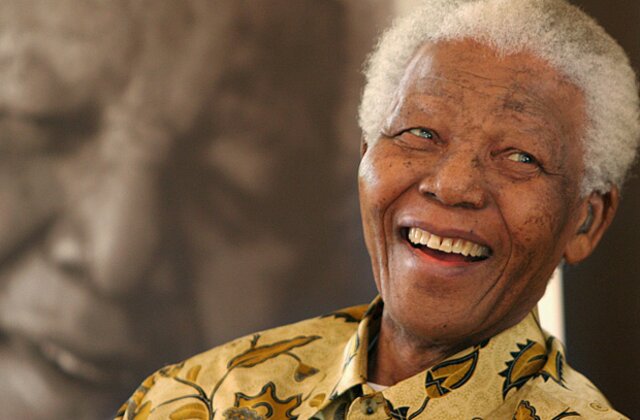
The Anti-Apartheid Icon and President: Nelson Mandela

radicalthought.org – Nelson Rolihlahla Mandela, affectionately known by his clan name, Madiba, was born on July 18, 1918, in the village of Mvezo, in the Eastern Cape of South Africa. He was born into the royal family of the Xhosa-speaking Thembu tribe, with his father serving as a chief. After his father’s death in 1927, Mandela was adopted by Chief Jongintaba Dalindyebo, who began grooming him for a role within the tribal leadership.

Mandela was the first in his family to receive a formal education. He attended a local missionary school, where a teacher gave him the English name Nelson. He later attended Clarkebury Boarding Institute and Healdtown, a Methodist secondary school, where he excelled in academics and sports. In 1939, he entered the University of Fort Hare, but was expelled for participating in a student protest.

Political Awakening and Activism

Mandela’s political awakening began in the 1940s when he joined the African National Congress (ANC) in 1944. He helped form the ANC Youth League (ANCYL) and became increasingly involved in the anti-apartheid movement. Apartheid, a system of institutionalized racial segregation and discrimination, was officially implemented in 1948 by the National Party, which further restricted the rights of non-white South Africans.

Mandela’s activism included leading the ANC’s 1952 Campaign for the Defiance of Unjust Laws, which involved organizing protests against discriminatory policies. He also helped draft the Freedom Charter, a document that called for a non-racial democracy in South Africa. In 1952, Mandela and his friend Oliver Tambo opened South Africa’s first Black law firm, providing free or low-cost legal counsel to those affected by apartheid legislation.

Imprisonment and International Icon

In 1962, Mandela was arrested and sentenced to life imprisonment for his anti-apartheid activities. He spent 27 years in prison, most of which was spent on Robben Island. During his imprisonment, Mandela became a symbol of the struggle against apartheid and a global icon for human rights. His unwavering commitment to justice and equality inspired people around the world to support the anti-apartheid movement.

Presidency and Legacy

Mandela was released from prison in 1990, and in 1994, he became South Africa’s first Black president. His presidency was marked by efforts to reconcile the nation’s divided communities and to build a democratic and non-racial society. Mandela formed a multiethnic government to oversee the country’s transition from apartheid to democracy. He also worked to address the social and economic inequalities that had been exacerbated by apartheid.

Mandela’s leadership extended beyond South Africa’s borders. He was a global advocate for human rights and peace, and in 1993, he was awarded the Nobel Peace Prize, which he shared with F.W. de Klerk, the last president of apartheid-era South Africa. Mandela retired from politics in 1999 but continued to champion social justice causes until his death on December 5, 2013, at the age of 95.

Conclusion

Nelson Mandela’s life was a testament to the power of perseverance, forgiveness, and reconciliation. His struggle against apartheid and his efforts to build a democratic South Africa have left an indelible mark on the world. Mandela’s legacy continues to inspire generations to fight for justice, equality, and human rights. He remains a symbol of hope and a beacon of light in the ongoing struggle for a more just and equitable world.
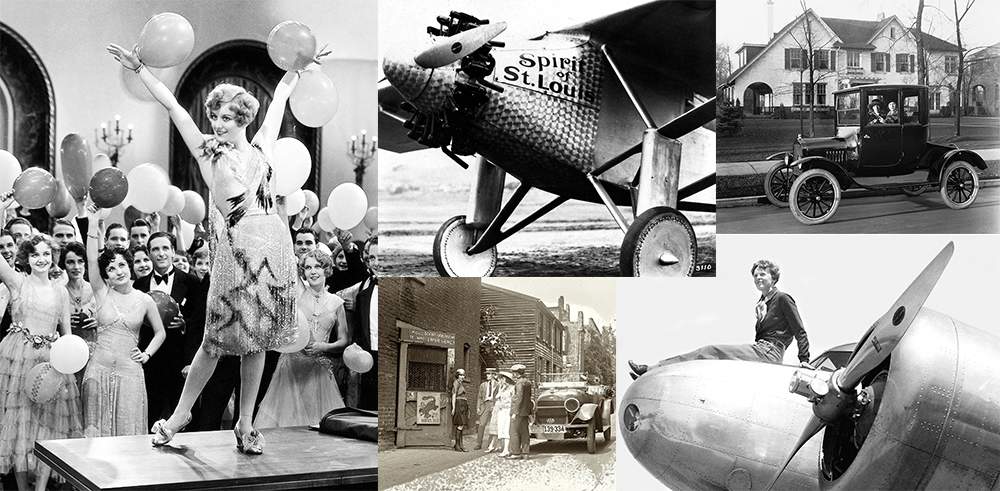
A Decade of Prosperity and Change: The Roaring Twenties

radicalthought.org – The 1920s, often referred to as the Roaring Twenties, was a decade marked by profound economic, social, and cultural changes in the United States and around the world. This period, which followed the end of World War I in 1918, was characterized by a surge in prosperity, technological advancements, and significant shifts in societal norms and behaviors. It was a time of great optimism and exuberance, as well as a period of significant challenges and contradictions.

Economic Prosperity

The 1920s were a time of unprecedented economic growth in the United States. The country experienced a significant expansion of its industrial and manufacturing sectors, driven by technological innovations such as the assembly line, which Henry Ford famously implemented in his automobile production. This increased efficiency led to a boom in consumer goods, making products like automobiles, radios, and household appliances more accessible to the average American. The stock market also thrived during this period, with many Americans investing in the hope of reaping substantial returns.

Technological Advancements

The Roaring Twenties were a golden era for technological advancements. Innovations such as the telephone, radio, and motion pictures transformed daily life and entertainment. The widespread adoption of the automobile not only revolutionized transportation but also influenced social norms, as it provided people with greater mobility and freedom. The radio became a central feature in homes, connecting Americans to news, music, and entertainment like never before. Motion pictures, or “talkies” as they came to be known with the advent of sound, captivated audiences and gave rise to Hollywood as a cultural phenomenon.

Social and Cultural Shifts

The 1920s were a time of significant social and cultural change. The decade witnessed the rise of the “New Woman,” a term used to describe women who embraced a more modern and independent lifestyle. This included wearing shorter skirts, bobbing their hair, and participating in activities that were previously considered inappropriate for women. The passage of the 19th Amendment in 1920, granting women the right to vote, was a landmark achievement in the struggle for gender equality.

The Jazz Age, a term coined by F. Scott Fitzgerald, captured the vibrant musical and cultural scene of the 1920s. Jazz music, with its roots in African American communities, became a symbol of the decade’s rebellious spirit and cultural diversity. Nightclubs and speakeasies, many of which featured jazz music, became popular venues for entertainment, despite the prohibition of alcohol, which was in effect from 1920 to 1933.

Contradictions and Challenges

Despite the prosperity and optimism of the Roaring Twenties, the decade was not without its challenges and contradictions. The economic boom was uneven, with significant wealth concentrated in the hands of a few, while many others struggled with poverty and unemployment. The Ku Klux Klan experienced a resurgence, and racial tensions remained high, particularly in the South. The Red Scare, a period of intense anti-communist sentiment, led to the persecution of political radicals and immigrants.

The End of an Era

The Roaring Twenties came to an abrupt end with the stock market crash of October 1929, which plunged the United States and much of the world into the Great Depression. The economic collapse exposed the vulnerabilities and excesses of the previous decade, leading to a period of profound introspection and change.

In conclusion, the Roaring Twenties was a decade of remarkable prosperity, innovation, and change. It was a time when the United States and other countries experienced significant shifts in economic, social, and cultural landscapes. Despite its challenges and contradictions, the legacy of the 1920s continues to influence the modern world, reflecting a period of both exuberance and vulnerability in the march of progress.