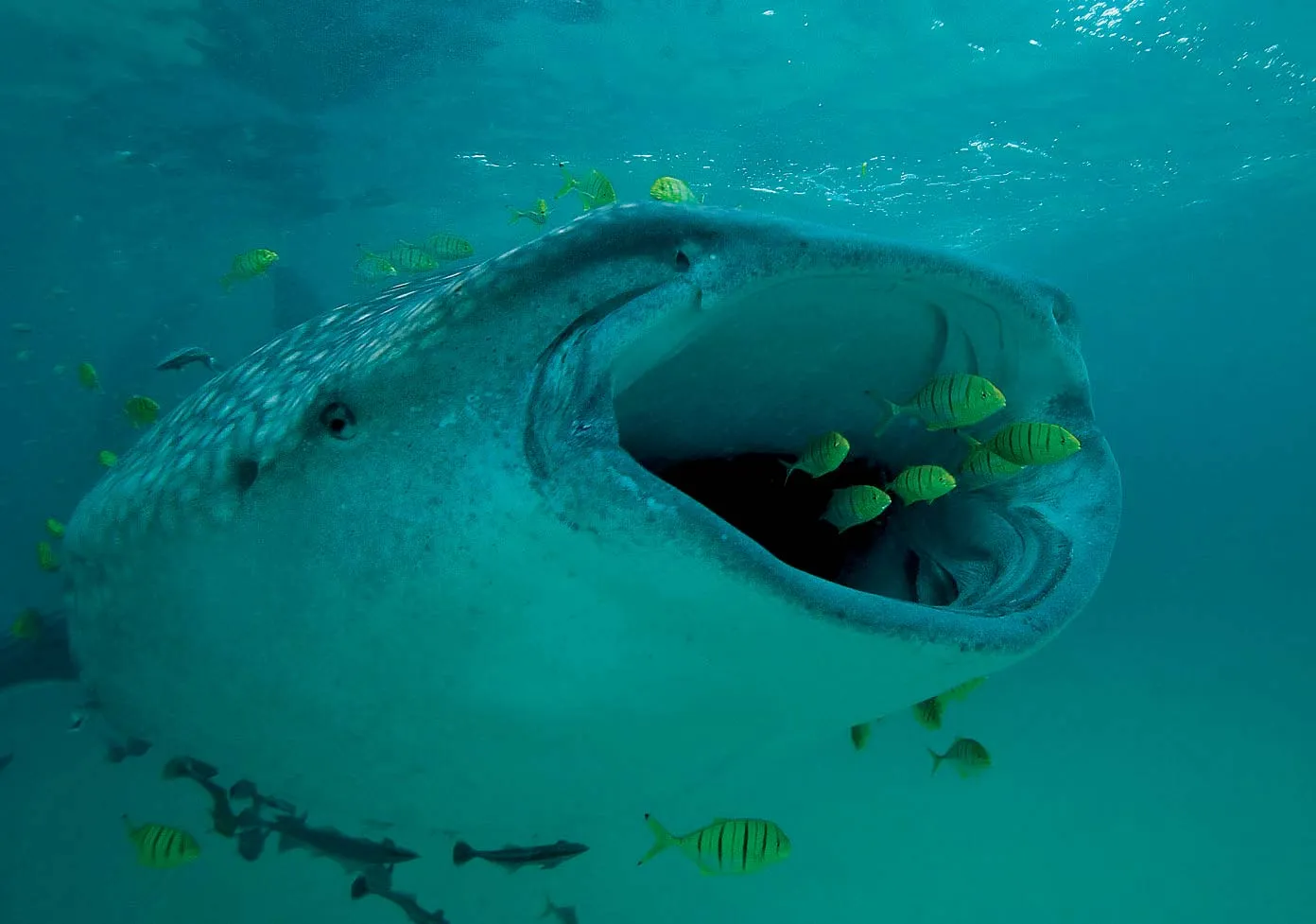
radicalthought.org – Whale sharks (Rhincodon typus) are the largest fish in the world, growing up to 40 feet or more. Despite their enormous size, these gentle giants are filter feeders, meaning they feed by straining small organisms from the water. Whale sharks are often found in warm, tropical waters, where they spend most of their lives gliding through the ocean, using their massive mouths to take in water and filter out their food. In this article, we will explore the whale shark’s diet, its unique feeding strategies, and the role it plays in marine ecosystems.
1. Filter Feeding: The Primary Method of Feeding
Whale sharks are filter feeders, meaning that instead of hunting large prey like many other sharks, they feed on vast quantities of tiny marine organisms. They use specialized feeding techniques to consume a variety of plankton, small fish, and other microscopic organisms found in the ocean. This feeding behavior allows whale sharks to thrive in nutrient-rich waters, where the abundance of small creatures is high.
Their large mouths, which can measure up to 5 feet wide, allow them to take in enormous amounts of water as they swim through it. As water flows into their mouths, it passes through gill slits that filter out food particles, leaving the water to exit through the shark’s gills.
2. Plankton: The Primary Food Source
Plankton, particularly zooplankton, form the core of the whale shark’s diet. Zooplankton consists of tiny, floating organisms, including small crustaceans like copepods and krill, as well as various larvae and other microscopic life forms. These organisms are abundant in the ocean, especially in areas where nutrient-rich upwellings occur.
Whale sharks are especially adept at filtering out zooplankton, using their large mouths to create suction as they swim slowly through the water. The plankton is collected in the whale shark’s throat, where it is swallowed, providing the shark with essential nutrients. Krill, in particular, is a significant part of their diet and is rich in proteins and lipids.
3. Small Fish: An Additional Food Source
In addition to plankton, whale sharks also consume small fish, including anchovies, sardines, and herring. These fish species often form schools near the surface, making them accessible to whale sharks when they are feeding. Whale sharks may swim through schools of small fish, filtering them from the water alongside the plankton and other organisms.
While small fish make up a smaller portion of their diet compared to plankton, they still provide valuable protein and energy. The fish are usually consumed as part of the overall filtering process, and the shark will often feed in areas where both plankton and small fish are abundant.
4. Crustaceans and Other Marine Organisms
Whale sharks are also known to consume other small marine organisms such as crustaceans, including shrimp and krill. These organisms can be found in planktonic communities and are often consumed by whale sharks alongside zooplankton and small fish.
During their feeding, whale sharks may also ingest small squid and other invertebrates, which are found in the same habitats as the plankton and fish they target. The wide variety of food they consume helps to meet their nutritional needs, supporting their large bodies.
5. Feeding Techniques: How Whale Sharks Capture Their Food
Whale sharks have evolved highly specialized feeding techniques to capture the vast amounts of food they need to survive. They are known for their slow swimming speed, which allows them to filter water efficiently. As they swim through the water, their mouths are wide open, taking in a continuous flow of water that contains food particles.
Their large gill rakers, comb-like structures located in their gills, play a crucial role in filtering food from the water. These gill rakers trap plankton and other small organisms as water flows through, and the shark then swallows the food. The whale shark’s feeding strategy is incredibly efficient, allowing it to consume large quantities of food without expending much energy.
Whale sharks are also known to use their sense of sight to locate areas with high concentrations of plankton or schools of fish. This helps them target regions of the ocean where food is abundant, such as near oceanic upwellings, where nutrient-rich waters bring plankton to the surface.
6. Seasonal Variation in Food Availability
Whale sharks are migratory animals, and their feeding habits often vary depending on the time of year and location. During certain times of the year, large concentrations of plankton and small fish gather in specific areas, providing a feeding bonanza for whale sharks. For example, whale sharks are known to congregate at specific sites like the Yucatán Peninsula in Mexico during the summer, when the plankton bloom is at its peak.
These seasonal aggregations occur when oceanic conditions, such as water temperature, current patterns, and nutrient upwelling, create an environment rich in food. As the seasons change, whale sharks may migrate to other areas where food is more abundant.
7. Ecological Role: Whale Sharks as Ocean Cleaners
Whale sharks play an important role in maintaining the health of marine ecosystems. As filter feeders, they help regulate plankton populations and contribute to the balance of marine food webs. By consuming large amounts of plankton and small fish, they help prevent any one species from becoming overly abundant, which can disrupt the ecosystem.
Their feeding also supports the food chain in other ways. As whale sharks consume plankton and small fish, they provide an opportunity for other marine animals, such as fish and marine mammals, to feed on the remnants or detritus left behind. This recycling of nutrients is vital for maintaining a healthy, functioning marine ecosystem.
8. Human Impact: Overfishing and Climate Change
While whale sharks are currently not considered endangered, they face several threats due to human activities. Overfishing is a significant concern, as the depletion of fish stocks can reduce the availability of food for whale sharks. In particular, the overfishing of small fish and plankton-eating organisms could impact the shark’s ability to find enough food.
Climate change is also affecting ocean ecosystems, causing shifts in water temperatures, current patterns, and the availability of plankton. These changes could disrupt the feeding behavior of whale sharks, making it harder for them to find food in the long term.
Additionally, habitat destruction, particularly in areas where whale sharks gather to feed, poses a significant threat to their survival. Coral reef damage, pollution, and human encroachment into marine protected areas can limit the availability of food and disrupt the natural feeding patterns of whale sharks.
9. Conservation Efforts: Protecting the Whale Shark’s Food Sources
Efforts to conserve whale sharks focus on protecting their feeding grounds, as well as ensuring that their food sources remain abundant. Conservationists are working to establish marine protected areas (MPAs) where whale sharks and other marine life can thrive without the threat of overfishing or habitat destruction.
Sustainable fishing practices are also critical to ensuring that whale sharks have access to their primary food sources. Initiatives to regulate fishing and protect plankton-rich areas can help safeguard the delicate balance of marine ecosystems and ensure that whale sharks can continue to feed in these vital regions.
10. The Future of Whale Sharks: Ensuring Food Security
The future of whale sharks depends on the conservation of their food sources and the protection of their feeding habitats. By reducing human impacts on the ocean and focusing on sustainable practices, we can help ensure that these majestic creatures have access to the food they need to survive. Whale sharks are not just important for the ocean’s health but also for the world’s biodiversity. Their role as filter feeders makes them essential components of marine ecosystems, and their continued survival will help maintain the balance of ocean life.
Conclusion
Whale sharks are extraordinary creatures with a diet that consists primarily of plankton, small fish, and other marine organisms. Their specialized feeding techniques and ability to filter enormous amounts of water allow them to thrive in the world’s oceans. As gentle giants, whale sharks contribute to the health of marine ecosystems by regulating plankton populations and supporting the marine food web. However, their survival is threatened by human activities, and concerted conservation efforts are necessary to protect their food sources and ensure their continued existence in the wild. Through sustainable practices and habitat protection, we can help ensure that these magnificent creatures continue to glide through the oceans for generations to come.